
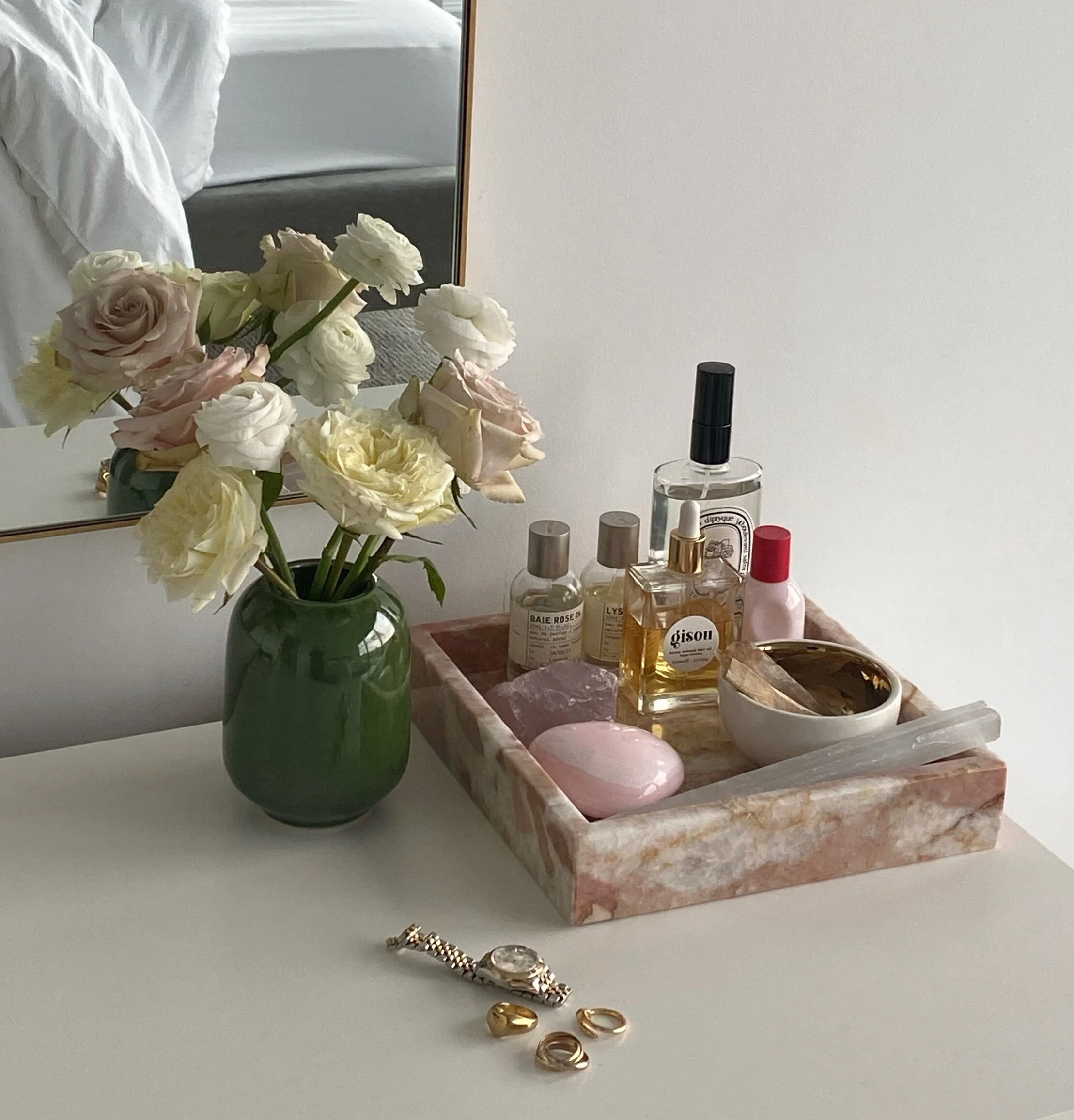
Reviewing GISOU Honey-Infused Hair Oil
Guest Editor Paige Lorenze has points worth noting about the highly-acclaimed GISOU honey-infused hair oil.
The story of GISOU roots itself in a product that was bound to happen.
Negin Mirsalehi, whose mother was a hairstylist and whose father was a beekeeper, fell into the world of hair care. Curious about the enchanting bottles that hold golden liquid processed with honey directly from the Mirsalehi bee garden, we sought out to test its most notable product, the multi-use GISOU honey-infused hair oil.

Firstly, meet Paige Lorenze our Guest Editor! It was important for us to review and discuss products that we didn’t only love, but could stand by as proof that they work well. Paige’s critical eye and understanding to the worlds of design and self-care (in addition to her natural connection with the world of flora) meant a perfect partnership. We got her GISOU as soon as we could.
“Overall, I’d buy it again and again. ”

Paige Lorenze at home.
We were curious to find out why, so FYI, here are the benefits of honey on the hair:
Honey enhances the hair follicles directly because it is an emollient (considered to be a natural conditioner). This also means it can actually wake up resting hair follicles to promote brand new growth.
Honey will restore shine in your hair which occurs as a result of too much sun exposure, increased pollution and overall dryer hair strands.
Honey, being a humectant with high sugar levels, seals in dampness, which actually anticipates hair fall and reinforces strong strands.
“I felt a difference in the moisture level of my hair, As a platinum blonde (with dry hair) feeling the difference instantly and having the shine and softness hold up was something I hadn’t experienced with other high-end oils.”
In addition to Paige, we were able to test this on 4C hair as well, where the review held up the same. The way GISOU seals moisture and makes strands more and more manageable overtime was true for the full spectrum of hair types. In a world where consumerism is at its height, it is crucial for us to highlight products that are fully inclusive in who benefits from them. Also, the versatility of a product is hugely important in our buying decisions.
“I love putting it in my hair as a mask. I don’t find it greasy, I also put it on my hairline (some of you might not want to do this) but it looked so nice.”
Placing the hair oil closer to the hairline is beneficial when keeping in mind our mentioned point about honeys benefits to our hair follicles in particular. Paige mentions her lack of finding a hair oil that hydrates and also smells good. Considering the best of both worlds (soft and good smelling tresses), we are sure to keep this one on our counters and in our regimens.
Have you tried GISOU? Stay tuned for more product stories featuring Paige.

How Constructs of Nature Influence Ma Yansong’s Architecture
Chinese architect Ma Yansong recognises the need for organic fluidity within the modern city.
By Stephanie Gao
As city-dwellers, how do we combat the mental fatigue of being immersed in high stress, productivity-focused environments?
Going out for a walk within our concrete jungle can offer little reprieve, as contemporary city-planning and architecture reflects our obsession with maximization and utility. Our lives are laid out on grids, but as humans we instinctively seek out the haphazard pops of green that can be found in parks and houseplants. Among our steel and concrete world, nature acts as reinvigorating force.

Chinese architect Ma Yansong recognises the need for organic fluidity within the modern city—a soulless complex populated by glass curtain walls and van der Rohe silhouettes that have come to define cosmopolitan skylines.
The Eastern affinity for landscape is to see architecture as one with natural elements, like stones and water, while the Western focuses on how nature can be subjugated by human will. Ma’s design philosophy sees the environment as a crucial medium on which an architectural experience is created; there must be harmony between the natural landscape, the urban complex, and the spiritual and emotional needs of its users. Ma is ever respectful of nature’s entropy and favours hand sketches over computer renders, for its randomness and emotional evocativeness.

In his work Huangshan Mountain Village, the contours of the apartment towers are based on the contours of the existing mountains, making each building a different size, shape, and height. His apartments do not sit on top of the mountains, rather they extend it.

Huanshan Mountain Village
Ma is a former apprentice of the renowned Zaha Hadid and the founder of MAD Architects, a firm whose designs can be seen in Canada’s very own Mississauga. Located on Absolute Avenue, the Absolute World condominiums are affectionately nicknamed the “Marilyn Monroe” towers for their sensual curvaceousness. Ma drew inspiration from nature when considering the residential skyscrapers’ sunshine and wind dynamics, envisioning manmade objects as conduits for natural forces that can create comfort in the everyday lives of residents. Ever cognizant of the one-of-a-kind quality of natural objects, Ma insisted on the necessity of two separate designs for the two towers so that the pair are not mechanical copies of one another, but two unique and independent forms in constant interaction.

Ma has always been a proponent of Chinese rocket scientist Qian Xuesen’s concept of the “Shanshui City”, a city that mixes the natural with the artificial in a dramatic way to elicit an emotional response and increase spiritual comfort. Chaoyang Park Plaza, in Ma’s home city of Beijing, is a 10-building complex that resembles a series of mountains and valleys within a classical Chinese landscape painting, also known as a Shan shui painting. It is another one of his designs that feature elegant, sloping curves in sharp contrast with its blocky surroundings. The complex is situated on the edge of Chaoyang Park and invites the park to expand into the city, instead of delineating a border within which nature is confined.
In our highly structured cosmopolitan lives, perhaps it is up to the very buildings we are surrounded and confined by to bring the flowing spirit and soul of nature back into our lives.

The Various Methods and Benefits of Armoatherapy
It was popular before, but now more than ever, aromatherapy proves to be a leading choice in personal wellness.
By Mrinalini Sundar Images Endlesslyloveclub
The by-products of our current world, such as anxiety and all of its associates, have become a more prominent reality. We’ve learned that there are several tips and tricks one can do to manage this collective feeling. One proven method is the use of essential oils for aromatherapy.

In a report published on Hopkins Medicine, Harpreet Gujral, Program Director of integrative medicine at Sibley Memorial Hospital mentions that,
“Even if essential oils just boost your mood, it can make a positive impact on your health and well-being.”
Besides having effects on our state of mind, these essential oils can also keep insomnia at bay, boost energy, and help focus during difficult times. Most importantly, aromatherapy is a step towards a self-care routine that is passive and effective.

DoTERRA, a popular name in the essential oils market, has reported an increase in purchases. Public Relations Director Kevin Wilson speaks with The Daily Universe and touches upon how consumers are looking for products that "keep their hands and living areas clean, strengthen their immune systems, manage stress, and remain calm during uncertain times. They want to remain positive and reduce stress during these challenging times."
The Purify Oil consisting of lemon peel, tea tree leaf, cilantro and herb oils is a best seller that purifies and freshens the surrounding air. For those who want a good long night's sleep, the Serenity Restful Complex with lavender goodness and natural plant extracts eases insomnia. Perhaps the most suitable for our current times, is the Frankincense Oil. The specific oils from this unique lavender blend helps support healthy cellular functions, immune systems and nervous functions. As a by-product, a peaceful, reminiscent aroma will takes presidence in the room.

Essential oils in the form of aromatherapy can be used in combination with necklaces, bracelets, and chains that absorb, then release onto your skin throughout the course of the day. The option of body oils and aroma sticks make the entire experience of aromatherapy more functional, multi-faceted, and enjoyable.

Our Highly Effective Quarantine Face Mask
We created an insanely effective face mask right in our kitchens, and couldn’t keep the secret to ourselves.
Using ingredients that we have in our home can create an effective face mask. Knowing all that goes into our skincare products is hard, in addition to many new agents that we are not familiar with.

To give our skin a natural detox, this face mask contains very few ingredients, and is beneficial as an exfoliant while achieving a natural glow.
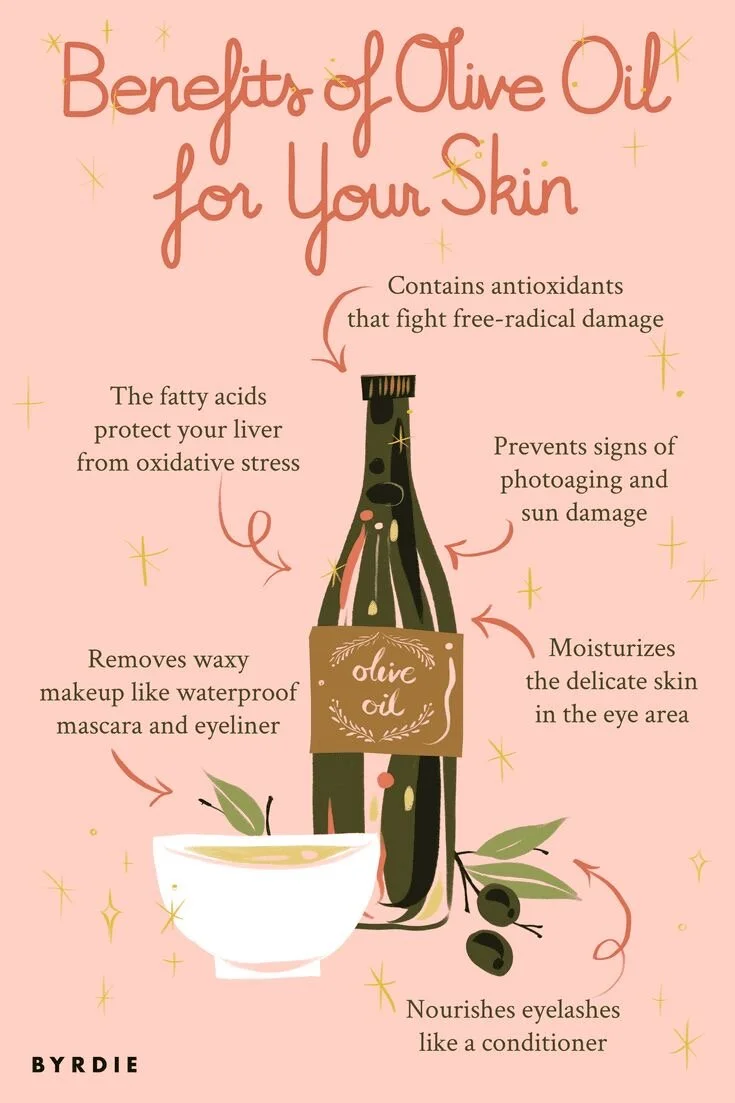
All you’ll need is baking soda, honey, olive oil, lemon and brown sugar.
1 tsp of lemon
1 tsp of olive oil
1 tbsp of honey
1 tsp of brown sugar
1 tbsp of baking soda
Melt the honey for 10 seconds in the microwave, then add the olive oil and baking soda and stir together. Continue to add the rest of the ingredients while leaving the brown sugar until last to prevent it from breaking down too much.

We used a lemon-infused olive oil for our mask. This is an effective option as it will carry a more fluid, even amount of highly concentrated freshly pressed lemon in high quantity. With that, this mask can only be used once a week and left on the skin for 10 minutes max with this amount lemon extract. It resulted in a highly effective mask at stripping away all dead skin and leaving skin extremely radiant - so we recommend this route for our skin mask lovers.
Baking soda is a safe product for skin use as it is a natural compound which is extracted from specific minerals. It boasts as a powerful exfoliant that carries various bleaching agents, also known to slightly shrinks the size of pores; crucial when preventing the build-up of bacteria and dirt.
Brown sugar is an ingredient we now look for when buying new face masks, so it was a no-brainer to incorporate it into our own. The abrasiveness of brown sugar grains in particular cleans away dry and dead skin cells, making skin smoother and more radiant, and is also one of the few ingredients we can trust as a skin polisher. Brown sugar leaves skin with a delicious smell - similar to some of the other ingredients we’ve combined.
In addition to its other skin perfecting agents, honey allows for the mask to be applied evenly and effectively to the skin. The antioxidant compounds help to fight premature signs of aging while also uncloging pores and preventing bacteria. After left on the skin for just a few minutes, you will be left with a soft-to-the-touch glow that lasts for days.
Lemon is an ingredient in this face mask that makes it a more ‘serious’ topical for your face. While there are some side effects that can occur if products with lemon are used too frequently especially with sun exposure, its skin purifying compounds make it a magical ingredient in this mask. Lemon is particularly good for those with dry skin and cases of eczema as it is said to alleviate skin patches brought about by dry skin cells. Lemon can also aid in the development of collagen levels as Vitamin C helps to prevent free radicals which damage collagen cells. This mask can be made without the lemon and still product amazing results while being gentle enough for daily use. If you decide to include lemon, we recommend this as a weekly mask.
If you attempt this mask - show us the process or your radiant skin afterwards by tagging us on Instagram!

Spring Topics | The Art of Curation with Sasha Mei
Talks on creating universes that reflect us with Sasha Mei. An approach to curation with purely ourselves in mind.
Curators are free to play in a space where the core understanding is to make sense of how they envision a certain tactile object or tangible thought. When these thoughts and objects are placed into sequence, a never-ending story is told, and that story is a direct reflection of the curator and their world, or the world as they envision it.
We began to think deeper about this after our interview with creator Sasha Mei.
We were lucky enough to have Sasha’s insight on topics that have been sensationalized since our digital world is now more than ever, a space for commodity. In addition, we relate many quotes and ideas from Filmmaker, Philanthropist and Futurist Jason Silva to the idea of formulating separate ideas and visions in our minds, and presenting them to the world as new perceived realities.
“Creativity and insight almost always involve an experience of acute pattern recognition: the eureka moment in which we perceive the interconnection between disparate concepts or ideas to reveal something new.”
The act of curation on Sasha’s feed intrigued us to find out more about what inspires her posts in relation to her perception of the interconnectedness of her differing interests.
“I’m happy to be a content-maker as well as a curator. Which means I am happy to be a presenter of amazing things. ”

2P: What are two main things you consider when curating your feed?
S: Always before posting, I question whether the content is a reflection of me. Am I posting something just for the sake of it? If so, my audience is smart and they recognize that - they won’t engage as much with it.
What do you think initially gained you momentum on Instagram?
This is difficult to answer because I really don’t think Instagram is about following. I’ll say my creative momentum came after I graduated from university. I was free from student life, I moved back and forth from cities, and I started to curate a life for myself. That’s when I started documenting more enthusiastically, and I guess people liked what I was creating!
How did you choose the niches that you stay focused on?
I don’t think I chose them consciously. My style is based on people who inspire me and the sweet little digital community I’ve fostered over the past year.
Do you see curation take form in any parts of your life aside from social media?
My bedroom for sure. I’m working on the rest of my apartment!

What advice do you have for someone who can’t figure out how to choose their direction and to stick to it?
I still don’t know what to do with my life. I work three jobs and I love the hustle. The best advice I’ve received is to always be open to learning, and just be honest. Own up to your mistakes - people will respect you for being truthful. Don’t think you have to be the best of the best right away. I’ll be honest, I’ve just started my career. It was hard not to feel like I had everything under control, and I’m learning every day that it’s okay to learn from others. It’s wonderful.
What are a couple of ways you make various categories (fashion, beauty, interiors/art) to all look cohesive despite their differing fields?
In French they call it a fil rouge - what is the red thread that connects everything together? It’s simple, and goes back to what I was saying before. Be honest. If you like things that vary across categories, then your personality is a fil rouge.

Spring Topics | The Art of Curation with White Sage
This week we interview mood board blogger White Sage about how to curate a feed to inspire an audience of engaged followers.
The act of curation becomes magic when an interior designer is given a quaint corner. We’ve seen this magic placed in a cohesive visual on the soothing and carefully attended Instagram page White Sage, ran by mood board aficionado Xanthea.

Through the careful integration of interiors, sculptures, precisely focused fashion images and juxtaposed furniture and artworks, Xanthea now inspires an audience who is searching for that perfect quaint corner, and more so, a space full of intent and inspiration.

To understand how these design-focused pages are thought out from beginning to end, we questioned Xanthea about her ultimate direction and inspiration for White Sage. Be sure to read the introduction to Week 1 of our Spring Topics series ‘The Art of Curation’.
What made you want to start an Instagram page based on the idea of a mood board?
I’d admired other mood board accounts and when telling a friend one day they said, “you could do that!” I started White Sage in my first year of design school. My course focused more on the construct of “interior design” rather than the aesthetics of it. White Sage was an outlet for me to put aesthetics out and then focus on making messy things in my real life explorations. I was already in love with the work of Art Director Carlota Guerrero and then Solange released ‘A Seat at the Table’. I was infatuated with the vibe she’d created sonically and visually and its consistency spanning different mediums. While White Sage is an Instagram page, I feel it gives me clarity when expressing myself in other forms.

Solange - ‘A Seat at the Table’ live performance.
Did you go into White Sage with a strict theme, or did you let that develop over time?
It kind of developed over time! I’d began loving that Summery warm seaside vibe and as I got deeper into my studies I learned about more sculptors and designers. My focus went more onto posting about them and soothing spaces.
Do you feel a tug at your willpower when curating on Instagram, and if so, how do you stay inside the lines?
I do! Sometimes I’ll post something, look at it beside other posts and decide to delete it. I know there are different phone apps to help visualise the overall mood of it - but my approach is quite impulsive. When I see something I like, I post it. I do consult with my partner on whether a post actually fits a ‘White Sage’ aesthetic or not. However, I’m a sucker for cute cat posts. During this strange time I’ve found it important to post lighter images of cute animals and dreamy outdoor settings to distract viewers from their indoor situations.
What do you think is important in curating an Instagram as it directly relates to gaining a following?
You can create your own sort of world on an Instagram profile. That’s what viewers will subscribe to. I didn’t create White Sage with gaining followers in mind, but seeing businesses use the platform, it’s a huge opportunity to communicate a brands ethos and gain potential clients. It’s a really exciting thing!
How did you go about choosing your niches to focus on, and how many do you think one should have?
Each niche is an interest I have, then communicated through my aesthetic. I love interiors, animals, yoga and fashion. I couldn’t stick to one strict niche as I’m fascinated by the crossovers and how one thing can inspire or influence another. I think by having a few, it brings you out of just being one sort of an Instagram profile. I don’t mind being associated with interior design as it is the forefront of my life.
Can you share a specific guideline you have when deciding on content for White Sage?
I try to post more minimal, white photos between fuller posts. Some spaces or images are too exciting not to post so I work to dilute it’s intensity then on my profile. I do love images of unmade beds so I’m aware to not only post those! If an image has yellows to it, I’ll balance it next to blues.
Stay tuned for our next interview with Sasha Mei, and keep up to date with the Spring Topics series on Instagram.

SPRING TOPICS | Introduction to the Art of Curation
The first week of our new series ‘Spring Topics’, discusses curation as it existed before, and during the age of social media.
To create within the boundaries you have formulated in your mind, and displaying those boundaries visually and creatively is called curation, and it has existed since Ancient Rome.

The Gallery of the History of Ancient Painting in the Hermitage, c. 1800s
The word crystallised in the 20th century with its meaning in relation to ‘taking care’ of artworks in a museum setting. After watching Ted Talk with highly acclaimed museum curator ‘Hans Ulrich Obrist’, he explains how the expansion of what is considered to be art intrinsically expanded what the practice of ‘curation’ relates to.
“It is much much more than filling a space with objects, it has to do with filtering, it has to do with enabling, it has to do with synthesizing, with framing, also with remembering. ”
Though we as interpretive viewers receive a final product that looks seemingly effortless, these ensembles of ‘things ‘ goes through a set of personal and external parcels during the creators process of visualization. Hans also mentions his belief in the fact that curation means we as humans are constantly trembling, meaning we are always ready to receive new experience and to incorporate them within oursleves without losing ourselves. This visual of curation emphasizes the importance of different elements comprising one art piece.
It can be daunting to think about hitting the reset button on your social media. Many of us will find ourselves in new jobs with new titles, or with different passions and want to adjust how we previously posted on our profiles. Yet, a sense of nostalgia remains and doing the social media ‘gut’ can be tough. Even if you want to pursue a more curated feed to better showcase your current self and to increase your leads, curation is an art practice, and is more intrinsically prominent in creative, left-brain individuals. Nonetheless, this term has been said to highly influence our visibility online regardless of your field. Those who have found a way to intertwine all their interests into a cohesive tableau keep viewers around longer and gain more followers as a result of trust. This trust is built easier as these profiles have displayed content with more intent, and more to read between the lines.
Now considered one of the most overused words of modern time, we debunk what it really means to be a curator and how it has taken on a new life form. We are all natural born curators. We must choose what does and doesn’t fit in our spaces, and in a grander scheme of things, in our lives. It is natural to curate. Now with the word being used as a describer and marketing tool of pretty much anything put together, we intend to revisit the traditional modes of curation, whilst examining new-age curators and their approach to interpreting various pieces of art as one tableau.